

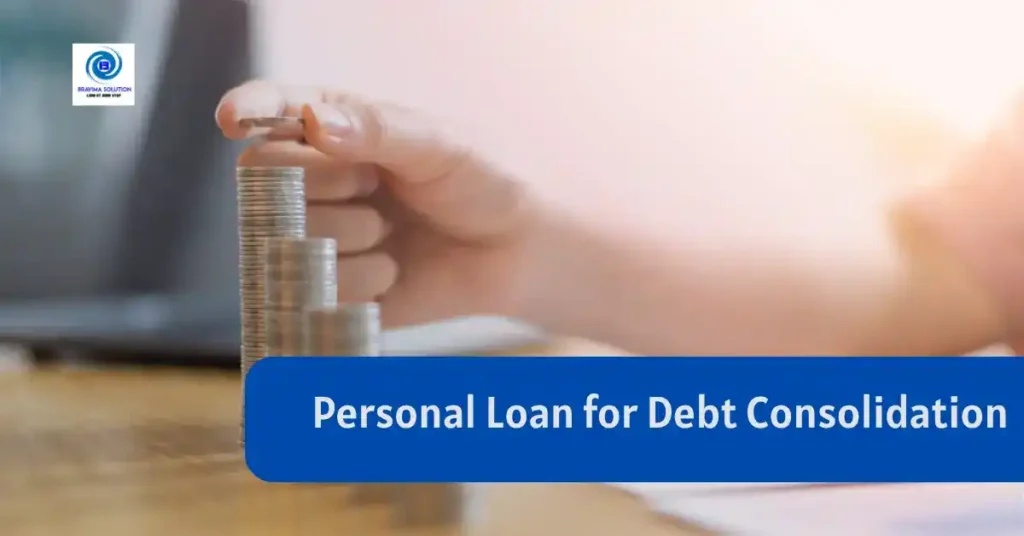
A personal loan for debt consolidation allows eligible borrowers to combine multiple outstanding debts into a single loan. It can help simplify repayments by replacing several EMIs or credit card payments with one monthly instalment.
Depending on the new loan’s interest rate, fees and repayment tenure, debt consolidation may also reduce the overall cost of borrowing. However, savings are not guaranteed and depend on the borrower’s existing debts and the new loan terms.
Bravima Solution Pvt. Ltd. helps borrowers explore personal loan options from banks and NBFCs and understand the application process.
In this guide, learn how debt consolidation works, its benefits and risks, eligibility criteria, required documents and how to compare personal loan options.

Low-Interest Personal Loans – Quick Disbursal!
What Is a Personal Loan for Debt Consolidation?
A personal loan for debt consolidation is a loan that eligible borrowers can use to repay multiple existing debts, such as credit card dues and other loans. Instead of managing several repayments, borrowers may be able to manage one EMI under the new loan agreement.
The new loan’s interest rate, processing fees, repayment tenure and total cost should be compared with the existing debts before making a decision.
Important: Debt consolidation does not automatically reduce debt or guarantee lower EMIs. Borrow responsibly and check the complete repayment cost before applying.
Why Consider a Personal Loan for Debt Consolidation?
A personal loan may help eligible borrowers manage multiple debts through a single repayment schedule. However, whether it is a suitable option depends on the interest rates, fees and repayment terms.
Potential benefits include:
- Simplified Repayments: Combining eligible debts into one loan may make monthly payments easier to track and manage.
- Potential Interest Savings: If the new loan has a lower overall borrowing cost than your existing debts, it may reduce the total interest payable. Compare all fees and charges before deciding.
- Structured Repayment: A fixed repayment schedule can help borrowers plan their monthly budget.
- Flexible Tenure Options: Some lenders offer different repayment tenures, subject to their policies and eligibility criteria.
- Better Debt Management: Consolidation may make repayment planning easier, but it does not automatically improve your credit score or eliminate debt.
Important considerations: A longer repayment tenure may reduce the monthly EMI but increase the total interest paid. Avoid taking on new debt after consolidation, and check the closure status of your existing accounts.
How Does Debt Consolidation Work? An Example
Suppose a borrower has outstanding balances across multiple credit cards and loans. They may explore a personal loan to repay those balances and manage the repayments through one new loan.
Before choosing this option, compare:
- Total Outstanding Debt: The combined amount required to settle existing balances.
- New Loan Interest Rate: Check the rate offered by the lender.
- Processing Fees and Other Charges: Include all applicable costs.
- Repayment Tenure: Compare the monthly EMI and total interest payable.
- Existing Loan Closure: Confirm that the old balances have been fully repaid or settled.
Illustrative example: If a borrower has ₹4.5 lakh in outstanding debt, they may explore a personal loan of a suitable amount to repay eligible existing balances. Whether this reduces the overall cost depends on the new loan’s interest rate, fees and tenure.
Debt consolidation does not guarantee savings. Compare the total repayment amount before applying.
How to Compare Debt Consolidation Loan Options
Before applying for a personal loan to consolidate debt, consider the following:
- Compare interest rates offered by different banks and NBFCs.
- Check processing fees, foreclosure charges and other applicable costs.
- Calculate the EMI based on your preferred repayment tenure.
- Review the total repayment amount, not just the monthly EMI.
- Check the lender’s eligibility criteria and required documents.
- Read the loan agreement carefully before accepting an offer.
Bravima Solution Pvt. Ltd. can help you explore available personal loan options and understand the application process. Final approval, interest rates, charges and loan terms are determined by the lender.
Banks and NBFCs Offering Personal Loans for Debt Consolidation
Several banks and NBFCs offer personal loans that eligible borrowers may consider for debt consolidation. Availability depends on the lender’s policies, the borrower’s profile and the intended use of the loan.
When comparing lenders, review:
- Applicable personal loan interest rate
- Minimum and maximum loan amount
- Available repayment tenure
- Processing fees and other charges
- Eligibility criteria and documentation
- Whether the lender permits the loan to be used for debt consolidation
Do not select a lender based only on an advertised starting interest rate. The actual offer and approval terms are determined by the lender after evaluating the application.
Bravima Solution Pvt. Ltd. can help borrowers explore available loan options from banks and NBFCs.

Need Cash Urgently? Apply for a Quick Loan Today!
Eligibility Criteria for a Personal Loan for Debt Consolidation
Eligibility for a debt consolidation personal loan varies across banks and NBFCs. Lenders generally assess the following factors:
- Age: The applicant must meet the lender’s minimum and maximum age requirements.
- Income: The applicant should meet the lender’s income criteria.
- Credit Score: Credit history and credit score may influence eligibility and loan terms.
- Employment or Business Stability: Lenders may review salaried employment or self-employment details.
- Existing Debt Obligations: Current EMIs, credit card dues and repayment history may be considered.
- Repayment Capacity: The lender evaluates whether the applicant can manage the proposed EMI.
Meeting these general criteria does not guarantee loan approval. Each lender follows its own eligibility and underwriting policies.
Documents Required for a Personal Loan for Debt Consolidation
The documents required may vary depending on the bank or NBFC and the applicant’s profile. Commonly requested documents include:
- Identity Proof: PAN card and other accepted identity documents.
- Address Proof: Aadhaar card, passport, voter ID or another accepted address document.
- Income Proof: Recent salary slips for salaried applicants or ITR and other income records for self-employed applicants.
- Bank Statements: Recent bank statements as requested by the lender.
- Existing Loan Details: Current loan statements, credit card statements and outstanding balance details.
- Photographs: Recent passport-size photographs, if required.
The lender may request additional documents during the application process. Submit accurate and updated information to support the assessment.
How to Apply for a Personal Loan for Debt Consolidation
Follow these general steps when exploring a personal loan for debt consolidation:
- Review Your Existing Debts: List all outstanding loans, credit card balances, EMIs and applicable charges.
- Calculate the Total Amount: Determine how much you may need to repay your existing debts.
- Compare Loan Options: Review interest rates, processing fees, repayment tenure and total borrowing costs.
- Check Eligibility: Review the lender’s eligibility requirements before applying.
- Prepare Documents: Keep your identity, address, income and existing debt documents ready.
- Submit Your Application: Complete the application and provide the required information.
- Review the Loan Offer: Carefully check the EMI, interest rate, fees and repayment terms before accepting.
- Repay Existing Debts: If approved, use the loan amount for the intended repayments and confirm that the old accounts have been settled or closed as applicable.
Loan approval and disbursal depend on the lender’s assessment, policies and verification process.
How Bravima Solution Can Help with Debt Consolidation Loan Options
Bravima Solution Pvt. Ltd. helps borrowers explore personal loan options from banks and NBFCs for their financial requirements.
Our assistance may include:
- Loan Option Guidance: Understand available personal loan options from participating lenders.
- Application Assistance: Get guidance on the general application process.
- Documentation Support: Understand the documents commonly requested by lenders.
- Option Comparison: Review applicable interest rates, EMIs, repayment tenures and charges.
- Application Updates: Get assistance with understanding the application process and its progress.
Important: Bravima Solution does not guarantee loan approval, lower interest rates or savings. Final eligibility, approval, interest rates, charges and disbursal are determined by the respective lender.
Emergency Funds? Get a Loan in Minutes!
Frequently Asked Questions About Personal Loans for Debt Consolidation
1. Can I use a personal loan to pay off credit card debt?
Eligible borrowers may use a personal loan to repay credit card dues, subject to the lender’s terms and permitted loan usage. Compare the new loan’s total cost with your existing credit card debt before applying.
2. Does debt consolidation reduce the total amount I owe?
No. Debt consolidation combines existing debts into a new repayment arrangement. It does not automatically reduce the principal amount owed. Savings, if any, depend on the new loan’s interest rate, fees and repayment tenure.
3. Can a debt consolidation loan improve my credit score?
It may help support better credit management if you make repayments on time and avoid taking on additional debt. However, a new loan application and changes to existing accounts can also affect your credit profile. An improved score is not guaranteed.
4. What credit score is required for a debt consolidation personal loan?
There is no single credit score requirement across all lenders. Banks and NBFCs assess credit history, income, existing obligations and other eligibility factors according to their policies.
5. Can salaried and self-employed individuals apply?
Both salaried and self-employed individuals may be eligible, depending on the lender’s criteria, income stability, credit profile and repayment capacity.
6. Are debt consolidation personal loans secured or unsecured?
Many personal loans are unsecured, meaning they do not require collateral. However, the loan type and conditions depend on the lender and the product.
7. What documents are required for a debt consolidation loan?
Common documents include identity proof, address proof, income proof, bank statements and details of existing loans or credit card balances. Requirements vary by lender.
8. Will I pay less EMI after consolidating my debts?
Your new EMI may be lower if you choose a longer repayment tenure or receive a different interest rate. However, a longer tenure can increase the total interest paid. Compare the complete repayment cost before deciding.
9. Can I consolidate multiple loans and credit cards into one personal loan?
You may be able to combine eligible outstanding balances, subject to the loan amount, lender policies and your repayment capacity. Confirm whether the lender permits the intended use.
10. How can Bravima Solution help me explore debt consolidation options?
Bravima Solution Pvt. Ltd. can help you explore available personal loan options from banks and NBFCs and understand the application process. Final approval and loan terms are determined by the lender.
Conclusion: Is a Personal Loan for Debt Consolidation Right for You?
A personal loan for debt consolidation may help eligible borrowers simplify multiple debt repayments into one monthly EMI. However, it is important to compare interest rates, processing fees, repayment tenure and the total amount payable before choosing this option.
Review your existing debts, check your repayment capacity and understand the new loan terms carefully. Avoid taking on additional debt after consolidation.
Bravima Solution Pvt. Ltd. can help you explore personal loan options from banks and NBFCs and understand the application process. Final loan approval, interest rates and other terms are determined by the lender.
Low-Interest Personal Loans – Quick Disbursal!
Similar Blog
- Make Navratri Bigger with Amazing Offers on Personal Loan
 Navratri 2026 is here, bringing the joy of celebration, new purchases and fresh beginnings. Don’t let a tight budget hold… Read more: Make Navratri Bigger with Amazing Offers on Personal Loan
- Best Personal Loan in Gurugram: Compare Top Banks, Rates & Instant Approval
 Gurugram, known as the Millennium City, is a hub of professionals, entrepreneurs, and fast-paced lifestyles. Whether it’s for a medical… Read more: Best Personal Loan in Gurugram: Compare Top Banks, Rates & Instant Approval
- Aditya Birla Capital Personal Loan – Features, Eligibility & How to Apply via Bravima
 In today’s fast-moving financial world, a personal loan is often the quickest bridge between a financial need and its solution… Read more: Aditya Birla Capital Personal Loan – Features, Eligibility & How to Apply via Bravima
- HDFC Personal Loan – Quick Funds with Easy EMI
 When you need quick funds for emergencies, weddings, travel, or home renovation, a personal loan is one of the fastest… Read more: HDFC Personal Loan – Quick Funds with Easy EMI
- Why Your Loan Gets Rejected Even With a High Salary (And How to Fix It)
 Many salaried professionals assume that earning a high income automatically guarantees loan approval. But in reality — banks and NBFC… Read more: Why Your Loan Gets Rejected Even With a High Salary (And How to Fix It)
- How a Co-Applicant Can Impact Your Personal Loan Eligibility
 Getting a personal loan can be challenging if your income is limited or your CIBIL score is on the borderline.… Read more: How a Co-Applicant Can Impact Your Personal Loan Eligibility
