

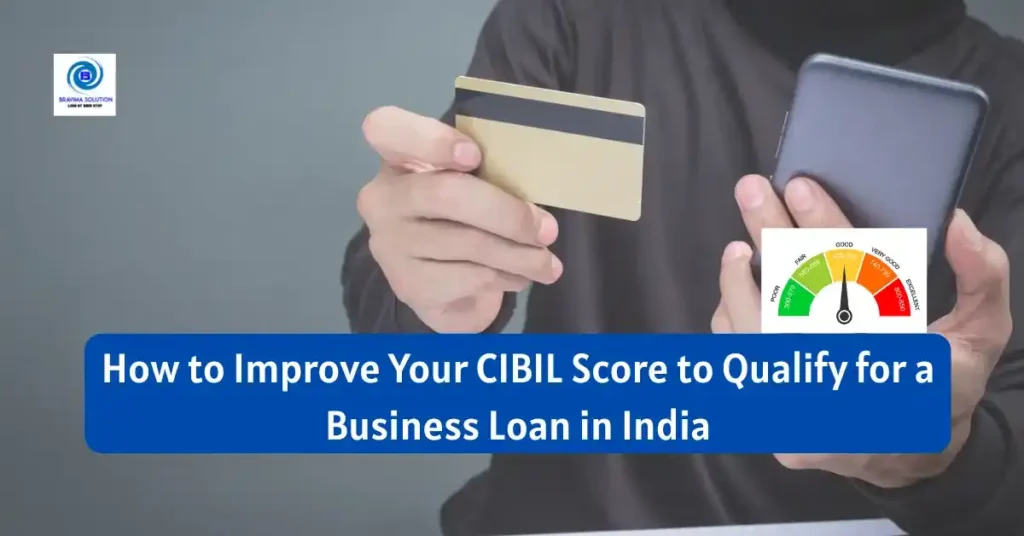
A good credit score, particularly your CIBIL score, is one of the most crucial factors lenders consider when you apply for a business loan in India. Whether you are a startup founder, SME owner, or solopreneur, your creditworthiness plays a key role in determining not only loan approval but also the interest rate and loan amount.
At Bravima Solution Pvt Ltd, we specialize in helping businesses secure financing from top NBFCs such as Bajaj Finserv, Tata Capital, and others—even if their initial credit scores need improvement. In this comprehensive guide, we’ll explain everything you need to know about CIBIL scores and share expert strategies to improve yours before applying for a business loan.
What Is a CIBIL Score?
The CIBIL Score is a three-digit number ranging from 300 to 900, issued by TransUnion CIBIL, a credit bureau licensed by the RBI. It reflects your past credit behavior based on your borrowing history, repayments, credit utilization, and other financial habits.
- 750 and above: Excellent – high chances of loan approval
- 650 to 749: Good – eligible for loan with slightly higher rates
- 550 to 649: Average – lenders may hesitate
- Below 550: Poor – most lenders will reject the loan application
Why Does Your CIBIL Score Matter for a Business Loan?
NBFCs and banks use your credit score to assess risk. A high score indicates responsible financial behavior, increasing your chances of:
- Faster loan approval
- Higher loan amount
- Lower interest rates
- Better repayment terms
Pro tip from Bravima: Even if your business is financially sound, a poor personal CIBIL score can hurt your chances of loan approval.
Minimum CIBIL Score Required by Top NBFCs
Here’s a general benchmark for popular NBFCs in India:
| NBFC | Minimum CIBIL Score Required |
| Bajaj Finserv | 685+ |
| Tata Capital | 700+ |
| HDB Financial | 650+ |
| Fullerton India | 650+ |
| Indifi | 600+ |
Factors That Impact Your CIBIL Score
Understanding what affects your score helps you focus your improvement efforts:
- Payment History: Missed or delayed payments hurt your score.
- Credit Utilization Ratio: High usage of credit limits is a red flag.
- Credit Mix: A healthy mix of secured and unsecured credit boosts your score.
- Credit Inquiries: Multiple loan applications in a short time reduce your score.
- Credit Age: The older your credit history, the better.
How to Improve Your CIBIL Score to Get a Business Loan
Here are actionable steps to improve your credit score and increase your chances of securing a business loan from NBFCs:
1. Pay All EMIs and Credit Card Bills on Time
Late payments have the biggest negative impact on your score. Set up auto-debit or calendar reminders to pay on time.
2. Maintain a Low Credit Utilization Ratio
Use less than 30% of your total available credit limit. Paying off credit card balances frequently can help lower this ratio.
3. Avoid Multiple Loan Applications
Each inquiry made by lenders shows up on your report. Apply only when necessary and go through an aggregator like Bravima Solution Pvt Ltd to compare multiple offers without hurting your score.
4. Regularly Check Your Credit Report
Errors or outdated information can drag down your score. Get your CIBIL report every 6 months and report any discrepancies.
5. Consolidate Debt
Multiple outstanding debts across credit cards or loans? Consider consolidating them into a single EMI with lower interest to avoid missed payments.
6. Increase Credit Limits (Without Using Them)
If your bank offers a higher credit limit, accept it—but don’t increase your spending. This lowers your utilization ratio and improves your score.
7. Keep Old Accounts Open
Long-standing credit accounts reflect positively. Don’t close old cards unless they carry high annual fees.
8. Add a Guarantor or Co-applicant
If you’re applying with a co-founder or partner who has a higher CIBIL score, your chances of loan approval improve significantly.
Timeline to Improve CIBIL Score
Improving your CIBIL score isn’t instant. Here’s a realistic timeframe:
| Action | Estimated Time to Impact Score |
| Paying off overdue bills | 30 – 60 days |
| Reducing credit utilization | 1 – 2 months |
| Disputing errors in CIBIL report | 1 – 3 months |
| Increasing age of credit account | 6+ months |
CIBIL Score vs Business Credit Score
In India, most NBFCs and lenders assess the personal credit score of the business owner for small business loan applications. However, for private limited companies, lenders may also check the company’s commercial credit score.
- CIBIL Score: Based on your personal loans, credit cards, and financial history
- Company Credit Score: Based on business loans, vendor payments, tax filings, etc.
Bravima Tip: Keep both profiles clean for best results when applying for larger loan amounts.
Real-Life Scenario
Case Study: Entrepreneur in Chennai
A Bravima client—a young entrepreneur from Chennai—initially had a CIBIL score of 620. His business was profitable, but loan rejections kept piling up. With our advice, he:
- Paid off 2 overdue credit cards
- Reduced credit usage to below 25%
- Updated his credit report
- Avoided applying for any new credit for 4 months
His score improved to 715 in 6 months, and he was approved for a ₹10 lakh loan from Tata Capital.
How Bravima Solution Pvt Ltd Can Help
As your trusted NBFC loan facilitator, we guide you through the entire credit improvement and loan application process:
- Free Credit Report Analysis
- Loan Options from 20+ NBFCs
- Personalized Advice to Boost Credit Score
- Support in English, Hindi, and Regional Languages
- Quick Online Application and Approval Process

Secure Your Business Funding – Apply in Minutes
Similar Blog
- Small Overdraft Loan for Business: A Smart Way to Manage Cash Flow
 Running a small business often comes with unexpected expenses and cash flow challenges. Whether it’s paying suppliers, covering salaries, or… Read more: Small Overdraft Loan for Business: A Smart Way to Manage Cash Flow
 - How to Reduce EMI on Business Loans in India: 7 Practical Ways
 If you’re running a business in India, managing your cash flow efficiently is crucial—and one way to ease financial pressure… Read more: How to Reduce EMI on Business Loans in India: 7 Practical Ways
 - What Is Business Turnover? Meaning, Types & Why It Matters
 For any business—large or small—turnover is one of the most fundamental metrics. But what does it really mean, and why… Read more: What Is Business Turnover? Meaning, Types & Why It Matters
 - Small Business Cash Advances: A Flexible but Costly Funding Option
 When small businesses face urgent funding needs—like addressing seasonal inventory demands or unexpected expenses—they often turn to cash advances (including… Read more: Small Business Cash Advances: A Flexible but Costly Funding Option
 - Business Working Capital Loans: A Lifeline For Small Manufacturers in India
 In today’s competitive and dynamic industrial environment, small manufacturers often face cash flow gaps that affect operations, payroll, raw material… Read more: Business Working Capital Loans: A Lifeline For Small Manufacturers in India
 - What Are the Foreclosure Charges on a Business Loan?
 Foreclosing a business loan—i.e., paying it off before the end of its scheduled term—can be a smart move to reduce… Read more: What Are the Foreclosure Charges on a Business Loan?
