


A No Due Certificate (NDC) is an official document issued by a bank or NBFC confirming that a borrower has cleared the outstanding dues on a loan account. It serves as written evidence of loan repayment and closure according to the lender’s records.
If you have recently repaid or foreclosed a loan, you should check with your lender about obtaining a No Due Certificate. This guide explains its meaning, importance, format, required details and the process of getting an NDC from a bank or NBFC.
What Is a No Due Certificate(NDC)?
A No Due Certificate is a written confirmation from a lender that no outstanding dues remain against a specific loan account, according to its records.
A lender generally issues an NDC after:
- All scheduled EMIs have been paid.
- Outstanding principal and interest have been cleared.
- Applicable charges or penalties have been paid.
- Loan foreclosure or scheduled repayment has been completed.
The certificate usually contains the borrower’s details, loan account number, loan closure date and confirmation of dues clearance.
Example: If you have repaid your personal loan in full, you can request a No Due Certificate from your bank or NBFC as written proof that the loan account has been closed.
Note: The name, format and issuance process may vary between lenders. Always check the certificate issued by your lender and keep a copy for your records.
Why Is a No Due Certificate (NDC) Important?
A No Due Certificate (NDC) is important because it provides written evidence that a lender’s records show no outstanding dues on a closed loan account. It can help borrowers maintain accurate financial records and resolve loan-closure disputes.
Here are the key reasons to obtain an NDC:
1. Proof of Loan Closure
An NDC serves as written confirmation that the outstanding loan dues have been cleared according to the lender’s records.
2. Helps Resolve Future Disputes
If a loan account is mistakenly shown as active or outstanding, the NDC can support your communication with the lender while requesting a correction.
3. Useful for Financial Records
Keeping a copy of your NDC helps you maintain documentation of completed loan repayments and account closure.
4. Helpful When Applying for Another Loan
An NDC may be useful if a future lender asks for proof that an earlier loan has been closed. However, it is not universally required for every new loan application.
5. Helps You Verify Loan Account Status
After closing a loan, check your credit report to confirm that the lender has reported the correct account status. If you notice an error, contact the lender and the relevant credit bureau to request a correction.
Important: Credit bureau updates are generally reported by the lender. You should not assume that submitting an NDC yourself will automatically update your credit report.

Emergency Funds? Get a Loan in Minutes!
What Information Does a No Due Certificate (NDC) Contain?
A No Due Certificate (NDC) generally contains the borrower’s details, loan account information, loan closure date and confirmation that no outstanding dues remain according to the lender’s records.
The exact format may vary between banks and NBFCs. Common details include:
- Borrower’s Name: Full name of the person who took the loan.
- Loan Account Number: Unique reference number of the loan account.
- Loan Type: Type of loan, such as personal loan, home loan or business loan.
- Loan Closure Date: Date on which the loan account was closed.
- Outstanding Dues Confirmation: Statement confirming that no dues remain on the account, according to the lender’s records.
- Lender’s Details: Name and contact information of the bank or NBFC.
- Authorised Signature or Verification: Signature, seal or digital authentication, depending on the lender’s process.
Tip: Check your name, loan account number and closure details carefully when you receive the certificate. Contact your lender if you notice any errors.
What Is the Sample Format of a No Due Certificate (NDC)?
A No Due Certificate generally includes the borrower’s details, loan account number, closure date and confirmation that no outstanding dues remain according to the lender’s records.
Below is a sample format for reference. Actual certificates may differ depending on the bank or NBFC.
Sample No Due Certificate
[Bank/NBFC Name]
NO DUE CERTIFICATE
Date: [DD/MM/YYYY]
To,
[Borrower’s Full Name]
[Borrower’s Address]
Subject: Confirmation of Loan Account Closure
This is to confirm that the loan account mentioned below, held in the name of [Borrower’s Full Name], has been closed in our records.
- Loan Account Number: [XXXXXX]
- Loan Type: [Personal/Home/Business Loan]
- Loan Closure Date: [DD/MM/YYYY]
- Outstanding Dues: Nil, as per the lender’s records on the date of closure.
This certificate is issued for the borrower’s records and reference.
For [Bank/NBFC Name]
Authorised Signatory
[Name and Designation]
[Official Seal, if applicable]
Note: This is only an illustrative format, not an official lender document. Contact your bank or NBFC for its actual NDC format.
When Should You Request a No Due Certificate (NDC)?
You should request a No Due Certificate (NDC) after completing all repayment obligations and the lender has confirmed that your loan account is closed with no outstanding dues.
You may request an NDC in these situations:
1. After Paying Your Final EMI
Once you have paid all scheduled EMIs and any applicable outstanding charges, contact your lender to confirm loan closure and ask about the NDC process.
2. After Foreclosing Your Loan
If you repay your loan before the scheduled tenure ends, request the NDC after the lender confirms that the foreclosure amount and applicable charges have been cleared.
3. After Clearing Outstanding Charges
If any late payment fees, penalties or other applicable charges remain, clear them first. Ask the lender to confirm that the account has no pending dues.
4. After Receiving Loan Closure Confirmation
Once the lender confirms that your loan account is closed, request the NDC if it has not already been issued.
Important: The process and timeline for issuing an NDC may vary by lender. Always confirm the requirements with your bank or NBFC and keep a copy of the certificate for your records.
How Can You Get a No Due Certificate (NDC) from a Bank or NBFC?
You can get a No Due Certificate (NDC) by completing your loan repayments, confirming that no dues remain and submitting an NDC request to your bank or NBFC.
Follow these steps:
Step 1: Clear All Outstanding Loan Dues
Pay all pending EMIs, principal, interest, foreclosure charges and other applicable fees, as confirmed by your lender.
Step 2: Confirm Your Loan Account Closure
Contact your lender through its official customer care, branch or online portal to verify that the loan account has been closed and no dues remain.
Step 3: Submit an NDC Request
Ask your bank or NBFC how to request the certificate. Depending on the lender, you may be able to apply through its website, mobile app, email or branch.
Step 4: Provide Required Details
You may need to provide your loan account number, registered mobile number and identity details for verification.
Step 5: Receive and Check Your NDC
The lender may issue the certificate digitally or physically, depending on its process. Check your name, loan account number, closure date and outstanding dues statement carefully.
Step 6: Keep a Copy for Your Records
Save the certificate securely. You may need it later as evidence of loan closure or to resolve a discrepancy.
Note: NDC issuance methods and timelines vary between lenders. Contact your bank or NBFC for the latest procedure and expected timeline.
What Is the Difference Between a Loan Closure Letter and a No Due Certificate (NDC)?
A loan closure letter and a No Due Certificate (NDC) both provide information about a loan’s closure. However, their wording, purpose and format may vary depending on the lender.
| Basis | Loan Closure Letter | No Due Certificate (NDC) |
|---|---|---|
| Purpose | Confirms that the loan account has been closed | Confirms that no outstanding dues remain according to lender records |
| Main Details | Loan account details and closure information | Borrower details, loan account number and no-dues confirmation |
| Issuance | Issued according to the lender’s closure process | May be issued automatically or upon request, depending on lender policy |
| Format | May be provided as a letter or digital document | May be provided as a certificate or digital document |
| Use | Helps maintain proof of loan closure | Helps maintain proof that no dues remain on the account |
Are a Loan Closure Letter and NDC the Same?
Not necessarily. Some lenders may use these terms interchangeably or combine both confirmations in one document. Always check whether the document clearly confirms that the loan is closed and no outstanding dues remain.
How to Get a No Due Certificate from Your Lender
- Pay your final EMI or complete foreclosure, and clear all charges.
- Send a written or online request to your lender for the No Due Certificate (NDC).
- Ask for the expected issue date in writing, and follow up if it is delayed.
- Check the certificate for your name, loan account number, closure date and the lender’s signature or seal.
What Should You Do If a Bank or NBFC Does Not Issue an NDC?
If your bank or NBFC does not issue a No Due Certificate after your loan has been fully repaid, contact the lender and request written confirmation of your loan account’s closure and outstanding dues status.
Follow these steps:
1. Contact Customer Support
Reach out to the lender through its official customer care channel and ask about the NDC issuance process.
2. Submit a Written Complaint
If you do not receive a response, submit a written complaint through the lender’s official grievance redressal channel. Include your loan account details and repayment confirmation.
3. Keep All Supporting Documents
Save payment receipts, bank statements, loan closure communication, emails and complaint reference numbers.
4. Escalate the Complaint if Necessary
If the lender does not resolve your complaint within the applicable period, you may check whether the matter is eligible for escalation through the RBI Complaint Management System under the RBI Integrated Ombudsman Scheme.
Important: Follow the lender’s grievance process first and check the RBI Ombudsman Scheme’s eligibility conditions before filing a complaint. An NDC request and a credit bureau correction request may require separate follow-ups.
Frequently Asked Questions About No Due Certificate (NDC)
1. What Is a No Due Certificate (NDC)?
A No Due Certificate is a document issued by a bank or NBFC confirming that no outstanding dues remain on a specific loan account, according to the lender’s records.
2. Is a No Due Certificate Mandatory After Loan Closure?
An NDC may not be mandatory in every situation, but obtaining and keeping written confirmation of loan closure is useful for your financial records.
3. How Long Does It Take to Get an NDC?
The issuance timeline depends on the bank or NBFC. Contact your lender to confirm its processing time and required documents.
4. Can I Download My NDC Online?
Some banks and NBFCs provide digital NDCs through their websites, mobile apps or email. Availability depends on the lender’s process.
5. Is an NDC the Same as a Loan Closure Letter?
Not always. A loan closure letter confirms account closure, while an NDC specifically confirms that no outstanding dues remain. Some lenders may combine both confirmations in one document.
6. Can I Get an NDC After Foreclosing My Loan?
Yes. You can request an NDC after paying the foreclosure amount and all applicable charges, once the lender confirms that no dues remain.
7. What Should I Do If My NDC Contains Incorrect Details?
Contact your lender immediately and request a corrected certificate. Keep the original document and supporting repayment records.
8. Does an NDC Automatically Improve My Credit Score?
No. An NDC does not automatically improve your credit score. The lender reports loan account information to credit bureaus, and your credit score depends on several factors.
9. What Should I Do If My Closed Loan Still Appears Active on My Credit Report?
Contact your lender and raise a dispute with the relevant credit bureau if the account status is incorrect. You can provide your NDC and loan closure documents as supporting evidence.
10. Can I Get an NDC If I Have Lost My Loan Account Number?
Contact your lender through its official customer care or branch. It may verify your identity using other registered details before helping you locate the loan account.
Conclusion: Why Should You Keep Your No Due Certificate Safe?
A No Due Certificate (NDC) is useful written evidence that your bank or NBFC records show no outstanding dues on a closed loan account. It helps you maintain proper financial records and may support you if a loan-closure dispute arises later.
After repaying or foreclosing a loan, confirm the account closure with your lender, request an NDC and carefully check the details mentioned in the certificate. Also review your credit report to ensure that the loan status has been reported correctly.
Keep your NDC, repayment receipts and loan closure documents in a safe place for future reference.
Need help understanding loan-related documents? Bravima Solution provides information and assistance to help borrowers explore loan options and understand the application process. Loan approval and terms are determined by the respective lender.
Bravima Solution Tip
If you’ve taken a loan via NBFCs like Tata Capital, Bajaj Finserv, or Lendingkart, they may issue NDCs:
- Through online dashboards
- Via email, as per your lender’s timeline
- On request through customer care
📞 If unsure, connect with Bravima Solution—we’ll follow up with your lender and ensure your loan status is closed both with the lender and credit bureaus.
Fast & Easy Loans – Get Instant Approval Now!
SIMILAR BLOGS
- Make Diwali Bigger with Amazing Offers on Personal Loan
 Diwali is the festival of lights, joy, and new beginnings. It’s a time when families come together to celebrate, shop… Read more: Make Diwali Bigger with Amazing Offers on Personal Loan
- CIBIL Score for Personal Loan : Minimum Score Required & How to Improve It
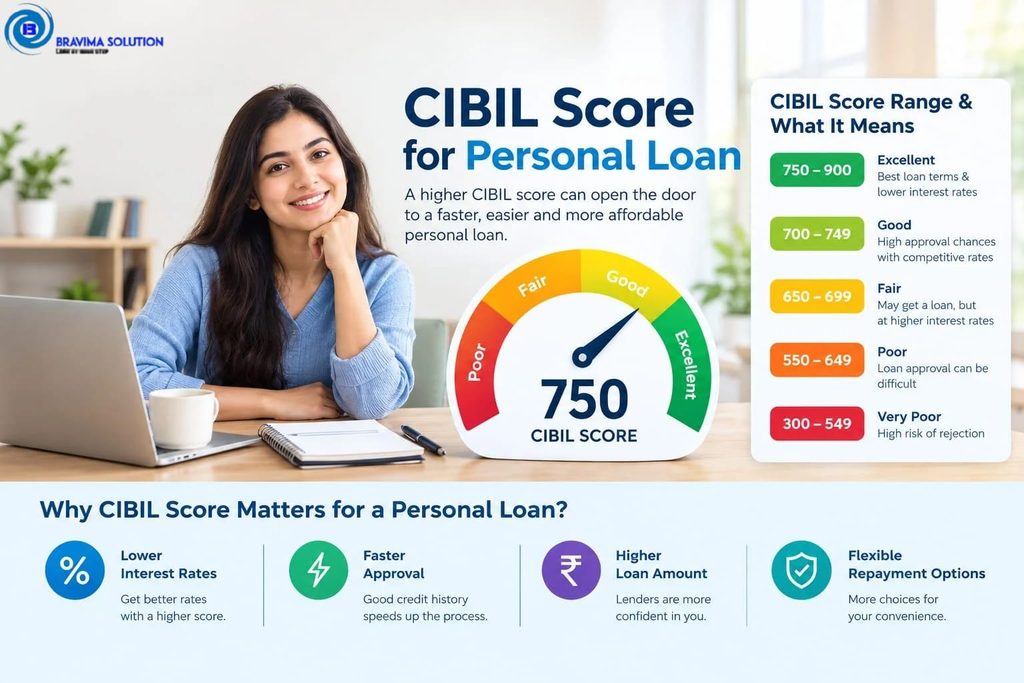 Your CIBIL score for a personal loan plays the biggest role in whether lenders approve your application and what interest… Read more: CIBIL Score for Personal Loan : Minimum Score Required & How to Improve It
- Make Navratri Bigger with Amazing Offers on Personal Loan
 Navratri 2026 is here, bringing the joy of celebration, new purchases and fresh beginnings. Don’t let a tight budget hold… Read more: Make Navratri Bigger with Amazing Offers on Personal Loan
- Overdraft Limit vs Personal Loan: How You Save More on Interest & Get Full Repayment Freedom
 An Overdraft (OD) limit and a Personal Loan are both credit facilities, but they function very differently in terms of… Read more: Overdraft Limit vs Personal Loan: How You Save More on Interest & Get Full Repayment Freedom
- Poonawalla Fincorp Personal Loan – Get ₹50 Lakh at 9.99% Interest
 In today’s fast-paced world, financial needs can arise anytime—whether it’s for medical emergencies, weddings, travel, or debt consolidation. If you… Read more: Poonawalla Fincorp Personal Loan – Get ₹50 Lakh at 9.99% Interest
- HSBC India Personal Loan Rates, Eligibility & Apply Online
 HSBC India Personal Loan 2026 – Interest Rate, Eligibility & Apply Online | Bravima Solution 📋 Loan Guide · Updated… Read more: HSBC India Personal Loan Rates, Eligibility & Apply Online
